
istockphoto.com/Spanishalex
After the stunning performance of James Hobley, the eleven-year-old with autism who blew away the audience on “Britain’s Got Talent” with an amazing dance routine, it’s a fitting time to address the benefits of dance for children on the autism spectrum.
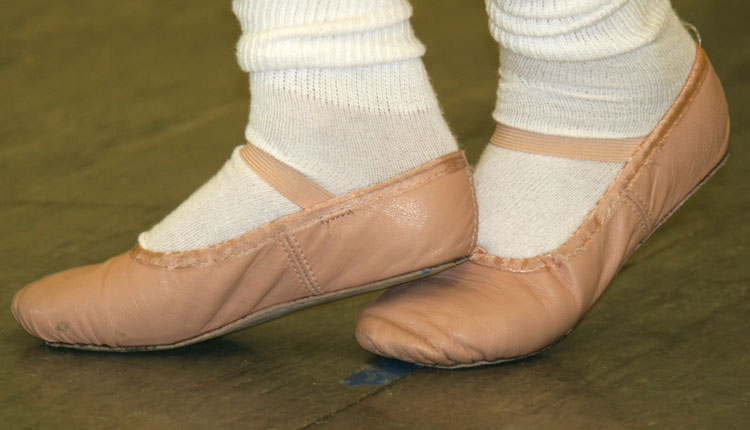
The practice of dance is highly structured and very ritualized, a selling point for children with autism. Dance has the power to help unlock the imagination of a concrete thinker and it empowers the dancer to give expression to their inner life, something crucial to children who struggle with other modalities of communication.
The experience of dance can open up children with autism to the possibility of more connection with others. Social interaction demands being on the same page with peers — something very difficult for a child on the spectrum to achieve. By encouraging children with autism to dance to rhythms, the mirroring of another’s experience bestows the satisfaction of belonging to a group.
Cutting-edge research points to children with autism needing multiple types of stimulation in order to process information. The combination of music and dance help the brain to reorganize itself. In dance, the child processes music, learns movement, performs movement to that music, then repeats it multiple times. The hearing, listening, processing, executing and repetition enable a child’s brain to forge new pathways, engaging both the right and left side of the brain.
One form of dance therapy, the Feldenkrais method, deliberately focuses on the interplay between the brain’s right and left hemispheres.
Moshe Feldenkrais developed a protocol that concentrates on rebuilding sensory and movement systems, specifically through unlearning poor movement patterns. The therapy is gentle, as I can personally
attest to and some children and adults with autism have experienced significant gross-motor, fine-motor,
sensory and relational improvement.
Feldenkrais practitioners who have undergone additional training to work with children with development disabilities have implemented principles of the Feldenkrais for Children with Neurological Disorders (FCND), a unique method that improves the movement qualities and abilities in
children.
Above all else, dance is fun and should be approached in that spirit. As someone with a degree in dance and decades of experience, I do recommend making sure a child’s dance teacher is always warm and supportive. There’s many a petty tyrant in tights who can potentially be damaging to a child psychologically. Additionally, watch closely for eating
disorders (a prime occupational hazard for dancers).
With that said, dance is a wonderful way for children on the autism spectrum to engage themselves and their world.


For information about the field of dance/movement therapy, visit the website: http://www.adta.org .
My son had his first hip hop class and seemed to follow and enjoybthe class. Hopefully he will enjoy it!
sounds promising…
My daughter who has ASD started dancing for the first time last night, It is something she asked for and for the first time ever she entered into the class with a strange teacher without wanting me to be there. It may have helped it was only a small group and her brother was also in the class and a friend from school but finally I can grab 30 mins to myself…bliss!, so not only beneficial for her but for me also.
Glad to hear it. I know what you mean about getting time to yourself, it is a slice of heaven…
This is my moment to share with anyone who is a parent or has a loved one with autism. My son was diagnosed at age 3 and I had no idea how to help him or what awaited him in his future. All his father and I knew is that we loved him. That’s all that mattered. Tomorrow my son turns 14 years old. I am the most blessed mother for having such a child as Enrique Daniel who has such a strong spirit of perseverance, love, justice, and confidence. He inspires me to be a better mother and person. Enrique has come a long way since he was diagnosed and now he is being recognized as The Most Inspiring Student for Bancroft Middle School. I am thankful for the day that despite my instinct to overprotect, I bit my tongue and said okay to Enrique wanting to do the school talent show. “I want to dance like Michael Jackson! I want to do Beat It!”. That decision changed his life from that day forward. He didn’t know how to dance, but he was determined he would figure it out. His love for Michael, his art and for dance has spilled over into other areas of his life. After almost 4 years of dancing he is now in main stream classes with help from RSP getting almost all A’s and getting accepted into Renaissance High School of the Arts for Fall 2013. I’m thankful most of all to God for such a precious gift as I have in Enrique. I’m very proud of Enrique for taking the challenge of having a disability and turning it into an opportunity to live life to the fullest. I welcome you view his student choreography piece from his last competition. Enrique currently just started his second year of competition and competes with children that have danced since they were 2 or 3 years old. Enrique started out imitating dance choreography, but as his dance progressed, his creativity own opened up. He’s only been in formal dance training for almost two years. The first two years were mostly self taught with an occasional recreational Michael Jackson class during the second year. Dance is the best thing that could have ever happened to my son.
I just posted about my son’s experience with dance and missed putting in the link I promissed to his student choreography:
http://youtu.be/4gUBKVrEFC0
Thanks for sharing…